
Have you ever heard of “Etsu”? Even locals from Fukuoka might scratch their heads at that one. It’s a white fish from the herring family that only lives in the Ariake Sea. It swims upstream in the Chikugo River to spawn between June and July, and that’s the only time it’s caught. You won’t find it in supermarkets. There’s almost no frozen distribution. If you want to eat it, you have to go right to the Ariake Sea.
The “Jojima Etsu Festival,” held every June in Kurume City’s Jojima Town, is packed with this unique culinary experience. Fried, in burgers, as sashimi—eating Etsu in the humid air of June gives it a taste that’s truly one-of-a-kind for that day. In this article, I’ve mapped out a route to conquer the gourmet scene in the Kurume and Yanagawa area, starting from the Jojima Etsu Festival. With just one Nishitetsu one-day free pass, you can travel by train from Tenjin to all the spots.
If you’re looking for “Kyushu food that isn’t in regular guidebooks,” this is one of the answers.
What is Etsu? — A Dish Born Only from the Ariake Sea and June
The formal name of Etsu is “Etsu (餌取).” It belongs to the Clupeiformes family, specifically the Engraulidae, and is a species unique to the Ariake Sea in Japan. It measures 20 to 40 cm in length, with a slender, flat, silvery body, and has a habit of swimming upstream to spawn. The fishing season lasts only a few weeks, from early June to early July, when this upstream migration begins.
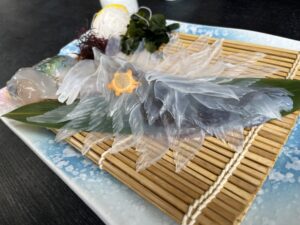
So why is it so rare? The freshness deteriorates quickly, and if frozen, the flesh falls apart, making it hard to distribute. Eating it as sashimi requires a delicate technique called “bone cutting,” which only skilled chefs can manage. Because of this, it’s hardly found outside the local areas of Jojima and Daizenji. You can’t find it in Tokyo, nor in Osaka. Even in Kyushu, it doesn’t show up in supermarkets in Fukuoka City.
When you try it, the flesh is white and mild, with the skin offering a unique umami typical of blue fish. When deep-fried, you can eat it whole, bones and all, providing a crunchy, calcium-rich treat. The sashimi is thinly sliced with bone cutting, featuring a slight sweetness and a hint of ocean aroma. It’s such a refined white fish that you might think, “Is this really a member of the herring family?” Eating a plate of it in the June breeze by the Chikugo River leaves a deep imprint on your travel memories.
Travel Preparation: Nishitetsu Free Pass & eSIM
If you want to conquer the Jojima Etsu Festival, Yanagawa River Cruise, and Kurume Ramen in one day, the Nishitetsu train’s one-day free pass is convenient. You can ride freely from Tenjin to Kurume, Yanagawa, and Omuta. You can purchase it in advance on Klook, which makes things smoother if you arrange it before your trip. Also, don’t forget to prepare an eSIM for using Google Maps and Google Translate on-site.
First Stop: Jojima Etsu Festival (Jojima Community Forest Park / Kurume City)
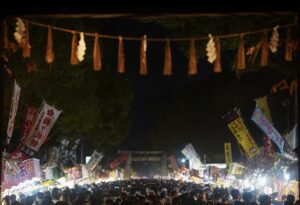
The Jojima Etsu Festival is a one-day event held every June at Jojima Community Forest Park. It’s heavily focused on eating Etsu, with nearly every stall serving up Etsu dishes. Freshly fried karaage, Etsu burgers made on the spot, salt-grilled Etsu, and sashimi with the bones cut out—this unique lineup fills the early summer air of Jojima.
It takes place in early June, when the most Etsu are caught swimming upstream in the Chikugo River, making it the best time of year for freshness. Karaage usually costs around 500 yen (check locally for exact prices), and the festival tradition is to eat the whole fish, bones and all, while standing. A little dip in soy sauce, and as you toss it into your mouth, you hear a satisfying crunch followed by the sweet flavor of the fish. There’s a delightful surprise in that first bite—it’s nothing like chicken karaage.
Store Information
- Date: June 7, 2026 (Sunday) *Check for confirmation in subsequent years due to annual scheduling
- Venue: Jojima Community Forest Park (Kurume City, Fukuoka Prefecture)
- Access: Get off at Nishitetsu Tenjin Omuta Line “Daizenji Station,” then access by car, on foot, or by taxi
SHIRO’S TIP
Etsu karaage loses its flavor quickly as it cools. Eat it right after it’s fried. For sashimi, freshness is key after the bones are cut, so it’s a good idea to check the arrival time of the sashimi stalls (usually around 11 AM) before lining up.

2nd Stop: Honkichi-ya (Yanagawa City, Fukuoka / Yanagawa Unagi no Seiro Mushi)
After the riverboat ride in Yanagawa, I felt the chill and dampness of the river lingering in my bones. Strolling leisurely along the waterway, I arrived at Honkichi-ya, a long-established spot that always comes up when talking about unagi in Yanagawa. Founded in the Edo period, their seiro mushi, finished with a secret sauce passed down through generations, is like tasting the deep history of Yanagawa in a single dish.
In Yanagawa, unagi is best enjoyed as “seiro mushi.” Steaming allows the fat to drip away, letting the sauce soak into the rice, creating a harmonious blend of unagi and rice. It’s different from the Kanto style of grilling after steaming or the Kansai style of direct grilling. This is a unique evolution that only emerged in Yanagawa. When the lid of Honkichi-ya’s seiro mushi is lifted, the sweet and savory aroma wafts up, and the surface of the unagi glistens. The steaming is just right—when I pick at it with my chopsticks, the flesh fluffs apart effortlessly.
Shop Information
- Address: 69 Asahimachi, Yanagawa City, Fukuoka Prefecture
- Access: About a 15-minute walk from Nishitetsu Yanagawa Station, or near the riverboat boarding area
SHIRO’S TIP
It takes about 15 minutes to walk from the end point of the riverboat ride to Honkichi-ya. The riverboat ride lasts about 70 minutes. Since the lunch peak (12:00 to 1:30 PM) often coincides with the end of the riverboat ride, it’s wise to either take a morning boat (starting around 10:00 AM) and then head for lunch or make a reservation in advance.
3rd Stop: Daihou Ramen Honten (Kurume City, Fukuoka / The Origin of Kurume Tonkotsu)
Surprisingly few people know that Kurume Ramen predates Hakata Ramen. In 1937, tonkotsu soup was developed in Kurume, marking the origin of Kyushu tonkotsu ramen, and Daihou Ramen is one of the long-established shops that directly follows that lineage. Founded in 1950, this shop started as a food stall and has been simmering the same soup in the same spot for over half a century.
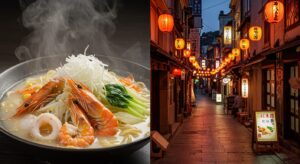
Kurume tonkotsu is darker and frothier than Hakata tonkotsu, with a more pronounced meaty aroma. One sip spreads the sweetness of the fat and a gelatinous richness across your throat. The noodles are thin but have just the right firmness for this soup. The most honest answer to the question, “How is this different from Hakata Ramen?” is simply, “This came first, and it’s richer.” If you find yourself in Kurume, don’t just leave after the Etsu festival—make sure to try this bowl too.
Shop Information
- Address: Kurume City, Fukuoka Prefecture (please check the official site for details)
- Access: From Nishitetsu Kurume Station or JR Kurume Station
SHIRO’S TIP
The soup at Daihou Ramen is made by adding to the base, so the richness can vary slightly from day to day. If you like it rich, don’t hesitate to order it that way. If you come after the Etsu festival in the evening, you can avoid the lunch crowd.
4th Stop: Hakata Issou (Kurume City, Fukuoka / Kurume Motsunabe)
Kurume isn’t just about ramen. It also has a reputation as the birthplace of motsunabe. The strong association of “motsunabe means Hakata” is more about tourism than history. If you trace its origins, it leads back to the coal miners in the Chikugo area. Hakata Issou is one of those places that keeps the tradition of Kurume motsunabe alive, with plump offal simmering in a soy-based broth.
When the pot starts bubbling, there’s no trace of the offal’s smell. Instead, the sweet and savory fat melds into the broth, while cabbage and garlic chives wilt down. For the finish, you can choose between “chanpon noodles” or “rice.” After a tiring June evening of the Etsu Festival and a boat ride on the Yanagawa River, gathering around this pot in the heart of Kurume feels like one of the best ways to wrap up a trip.
Shop Information
- Address: Kurume City, Fukuoka Prefecture (please check the official site for details)
- Access: From Nishitetsu Kurume Station or JR Kurume Station
SHIRO’S TIP
At Hakata Issou, motsunabe is often ordered for two or more (check first). If you’re solo, you can pull off a “motsunabe for one + ramen” combo. Pairing it with Kurume ramen might be overdoing it, but hey, that’s just part of enjoying Kurume the right way.
Comparison Table: Jojima Etsu Festival × Kurume and Yanagawa Gourmet List
| Spot | Genre | Area | Recommended Timing | Solo Travel OK |
|---|---|---|---|---|
| Jojima Etsu Festival | Event Food (Etsu Fried Fish & Sashimi) | Jojima Town, Kurume City | June 7 (Sunday) Morning to Noon | ◎ |
| Motoyoshiya | Grilled Eel in a Steamer | Yanagawa City | Lunch after River Cruising / Early Dinner | ○ |
| Taiho Ramen | Kurume Tonkotsu Ramen | Kurume City | Evening after the Festival | ◎ |
| Ichito | Kurume Motsunabe | Kurume City | Night (Dinner) | ○ (Check Required) |
Model Route to Conquer in One Day (Using Nishitetsu Free Pass)
If you’re leaving Tenjin around 9 a.m., the best move is to get off at Nishitetsu Yanagawa Station and catch the morning boat ride (starting around 10 a.m.). After the boat ride, walk to Honkichi-ya for some eel steamed in a wooden box for lunch. In the afternoon, transfer at Daizenji and head toward Jojima, where you can enjoy fried eel at the Jojima Ets Festival (held all day if it’s June 7). In the evening, make your way to Nishitetsu Kurume to wrap up with either Daiho Ramen or Ichito — this route makes the most of your one-day free pass.
It takes about 30 minutes on the Nishitetsu Limited Express from Tenjin to Kurume, and about 20 minutes on the express from Kurume to Yanagawa. There’s not much hassle with transfers, making it easy to navigate even for inbound FIT travelers while checking the timetable. If you’re worried about signal issues, arranging an eSIM before you leave will let you check transfers on Google Maps as you go.
Travel Preparation: Nishitetsu Free Pass & Yanagawa River Boat Ride
The Nishitetsu one-day free pass allows unlimited rides between Tenjin and Omuta on the Tenjin Omuta Line. If you book the Yanagawa riverboat tour in advance on Klook, you can skip the lines at the ticket counter on the day. Arranging both together makes your travel on the day much easier.
Summary: A June Journey to Meet the Chikugo River
The fish called Etsu might seem like a modest reason to travel. It’s not prominently featured in guidebooks, and even locals might not know about it. Yet, making the trek to Jojima just to taste that one dish means you’ll experience the air of the Chikugo River in June. The smoke from festival stalls, the slow flow of the river, the steam that rises when you open a traditional steamer. A bowl of ramen in Kurume, enveloped in the aroma of tonkotsu.
This journey begins with learning the name “Etsu.” It’s a trip that moves for just one dish, found only by the Ariake Sea in June. For some reason, journeys motivated by such simple reasons stick in my memory.


Comments