
Takayama Festival (Autumn) — Two Days Where Yatai and Hida’s Artisan Culture Intersect
The Takayama Festival takes place twice a year, in spring (April 14–15) and autumn (October 9–10). In spring, twelve yatai appear for the Hie Shrine festival, while eleven yatai show up for the Sakurayama Hachiman Shrine festival in autumn. Both festivals have been celebrated since the Edo period and were registered as UNESCO Intangible Cultural Heritage in 2016.
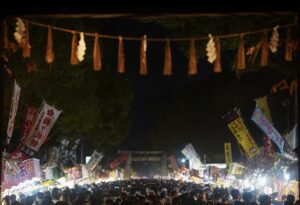
When I say “yatai,” you might picture food stalls, but the yatai at the Takayama Festival are something entirely different. They are lavish floats adorned with intricate carvings and metal fittings, some towering several meters high. These masterpieces were crafted by Hida artisans competing with one another, and each float boasts a unique design. As these yatai slowly parade through the old streets, spectators line the sidewalks, and for a brief moment, as the floats pass by, it feels like time stands still.
The climax of the autumn festival is a procession called “Mikoshi,” where the floats march alongside portable shrines. There are two parades, one in the morning and another in the afternoon, with the morning parade being particularly crowded. If you want a spot at the front, you’ll need to claim your place by 7 AM. For a more relaxed viewing experience, aiming for the afternoon parade is a better option.
Model Plan for Takayama Festival Day
Route / Model Course (Thursday, October 9, 2026)
This is a one-day plan starting from Takayama Station. If you arrive the day before, you can get moving as early as 7 AM.
| Time | Location / Activity |
|---|---|
| 07:30 | Jinya-mae; secure a spot along the parade route (morning parade around 9 AM to 12 PM) |
| 09:00 | Stroll through Kamimachi (old town) / Try Hida beef nigiri at Kotte Gyuu |
| 10:00 | Mitara Dango shop for Mitarashi dango / Visit the morning market at Jinya-mae |
| 11:00 | Watch the morning food stall parade (around Kamimachi to Yasukawa-dori) |
| 13:00 | Lunch at Chuka Soba M for Takayama ramen |
| 14:30 | Explore Sannomachi and sake breweries / Walk towards Hida no Sato (if you have energy) |
| 16:00 | Check in at your accommodation / Rest |
| 18:00 | Night view of the food stalls being set up (you might see the lanterns lit) |
| 19:00 | Dinner with local cuisine and sake at Hida no Suke |
Since the morning parade draws a crowd, it’s best to finish your stroll and food sampling in the old town between 8 and 9 AM. Once the parade starts, Kamimachi gets so crowded you can hardly stop.
First Stop: Kotte-gyu (Hida Beef Nigiri, Kamisanomachi)
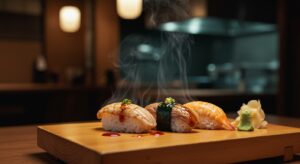
As I walked along the cobblestone streets of Kamisanomachi, I spotted smoke rising from a narrow alley. The sound of Hida beef sizzling over charcoal filled the air. That smoke led me to Kotte-gyu. You can buy Hida beef nigiri one piece at a time, making it a perfect snack while wandering around Takayama.
What Makes This Place Special
Grilled A5 rank Hida beef served on a small ball of rice bursts with a sweet, fatty flavor the moment you take a bite. You can try it with either wasabi soy sauce or salt koji for a little comparison. There’s not much seating right in front of the shop, but there are small benches along the old town’s alleys where you can enjoy the scenery while you eat.
Since it’s a popular spot, lines start to form after 10 a.m. On festival days, it’s especially busy. If you visit around 9 a.m., you’ll find almost no wait. Being able to buy just one piece makes it easy to pop in for a quick bite while exploring.
Shop Information
- Address: 82 Kamisanomachi, Takayama, Gifu Prefecture
- Access: About a 15-minute walk from JR Takayama Station (within the old town of Kamisanomachi)
- Hours: 10:00 a.m. to 5:00 p.m.
- Closed: Tuesdays
- Tip for Visiting: On festival days, the 9 a.m. hour is the least crowded. They sell out quickly, so don’t count on a second chance in the afternoon.
Shiro’s Tip
If you can’t decide between soy sauce and salt koji, I recommend ordering both. The soy sauce sharpens the sweet fat of the Hida beef, while the salt koji adds a smooth richness. The flavors are completely different. For just 150 to 200 yen per piece, this tasting experience is a must when talking about Takayama’s food.
Second Stop: Jinya Dango Shop ( Mitarashi Dango, In Front of Jinya)
Just before you pass through the gate of Takayama Jinya, a small shop along the road wafts the sweet and savory aroma of Mitarashi dango grilled over charcoal. Jinya Dango Shop has long been a beloved spot for locals and travelers alike, especially with the morning market right in front. Waiting for the next dango to finish grilling while gathered around the charcoal fire feels just right in the crisp morning air of Takayama.
What Makes This Place Special
Takayama’s Mitarashi dango is a bit different from Kyoto’s version. They use two skewers, and the sauce is a soy-based blend that’s less sweet and a bit thicker. The charred surface from the charcoal grilling adds a delightful smokiness that pairs perfectly with the sauce. By the time you finish one skewer, the next dango is already sizzling over the fire. Eating in this outdoor standing style while taking in the view of the stone walls of the Jinya and the fresh vegetables at the morning market is a morning luxury you can only experience in Takayama.
The morning market starts around 7 AM and begins to wind down around noon. Local farmers display their vegetables and pickles, creating a mingling space for tourists and locals. Since the dango shop is part of this morning market atmosphere, arriving early lets you soak in the peaceful pre-festival scenery of Takayama.
Shop Information
- Address: 1-chome Hakken-machi, Takayama, Gifu Prefecture (In front of Takayama Jinya)
- Access: About a 10-minute walk from JR Takayama Station
- Hours: 9:00 AM – 3:00 PM
- Closed: Tuesdays
Shiro’s Tip
The morning market is least crowded around 8 AM. After 9 AM on festival days, the streets in front of the Jinya start to fill up. It makes sense to enjoy the dango and the market first before heading to the old town, both for timing and energy.
 Check reviews and English menu on Tabelog
3rd Stop: Chuka Soba M (Takayama Ramen, Honmachi)
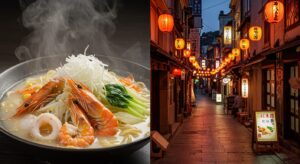
With only eight counter seats and basically just one type of ramen on the menu, Chuka Soba M is a place that thrives on simplicity. They open for just one lunch service, and once the soup runs out, that’s it for the day. No reservations—if there’s a line, you wait outside. The 4.7 rating in the Takayama ramen world seems justified when you taste a bowl that makes you think, “Yeah, this is worth the wait.”
What Makes This Place Special
Takayama ramen features a unique soy sauce-based broth with thin noodles. It’s often described as a blend of chicken bones and Hida beef fat, but the broth at Chuka Soba M is a clear amber color, and the moment you sip it, a distinct umami hits you. It’s not heavy, yet it has a depth that makes you want to keep drinking. The noodles are thin and curly, perfectly clinging to the soup.
Because there are so few seats, expect a line during lunch on festival days. If they have an evening service, you can get in starting at 5:30 PM. You could say it’s not an exaggeration to claim, “I came to Takayama just to eat this ramen,” and it’s absolutely worth it.
Store Information
- Address: 2-10 Honmachi, Takayama City, Gifu Prefecture
- Access: About a 10-minute walk from JR Takayama Station
- Hours: 11:00 AM – 2:30 PM / 5:30 PM – 8:00 PM
- Tip for Visiting: To minimize wait time, line up right after they open at 11:00 AM or after the lunch rush around 1:30 PM. The evening service may close on certain days, so check before you go.
Shiro’s Tip
If you’re going to try Takayama ramen, I recommend going for lunch instead of dinner. On festival nights, you won’t regret trying other local dishes like Hida beef or Hoba miso. Ramen can wait until the next morning or even lunch. Prioritize your culinary experiences in the evening to fully enjoy Hida’s food culture.
4th Stop: Steakhouse Kitchen Hida (Hida Beef Steak, Honmachi)
The exterior facing Honmachi Street has a vibe that feels like time stopped in the Showa era. Kitchen Hida is a long-established restaurant that specializes in Hida beef steak, serving as a go-to spot for locals celebrating special occasions. Tourists and local families sit at the same tables, and the aroma of Hida beef sizzling on the grill fills the air. That chaotic atmosphere somehow adds to the charm of the place.
What Makes This Place Special
You can get Hida beef steak in lunch sets starting from around 1,500 to 3,000 yen (prices may vary, so check the official site). You can choose from cuts like sirloin and tenderloin, and the simple cooking method on the grill brings out the sweet richness of the beef fat. After experiencing a “bite-sized” taste with the beef nigiri, sitting down to enjoy a steak allows you to fully appreciate the multi-dimensional experience of Hida beef.
Lunch starts at 11:30, and dinner begins at 17:00. Lunch tends to turn over quickly, while dinner is a more leisurely affair. On festival nights, it gets crowded, so arriving early around 16:00 is a safe bet.
Store Information
- Address: 1-66 Honmachi, Takayama City, Gifu Prefecture
- Access: About a 12-minute walk from JR Takayama Station
- Hours: 11:30–14:45 / 17:00–19:45
- Tip for Visiting: On festival days, aim for right after the 17:00 opening. After 19:00, you might not be able to get in.
Shiro’s Tip
If you try both the Hida beef steak and nigiri, you’ll experience how the same meat can transform into different dishes based on the cooking method. The nigiri offers a “concentrated burst of flavor,” while the steak is an experience of “slowly savoring the meat’s richness.” You don’t have to choose just one. I recommend experiencing both on the same day.
5th Stop: Hida Sake and Local Cuisine Hida no Suke (Dinner, Tenman-cho)
The night in Takayama quietly breaks. After the festival ends and most tourists retreat to their lodgings, Hida no Suke, tucked away in the back alleys of Tenman-cho, still carries the scent of local sake and the smoke from the irori hearth. The interior is cozy, with a counter and a small raised area. It’s nice to have a counter where solo travelers can sit—definitely a plus when you’re on the road.
The Charm of the Place
The star of Hida no Suke is “hoba miso.” This local dish features Hida miso and seasonings placed on a magnolia leaf, warmed over charcoal while you mix in vegetables and tofu. It balances the richness of Hida beef, which I had hastily devoured standing outside during the festival, with the fragrant miso and fresh veggies. The selection of local sake is impressive, making it a great spot to sample Hida’s offerings by the glass.
As I sip sake from local breweries (like Oita Shuzou, Futaki Shuzou, and Funasaka Shuzou) while watching the smoke from the hoba miso, I get to see a different side of Takayama, one that contrasts sharply with the daytime festival chaos. For visitors to Japan, it’s also a chance to experience the izakaya culture firsthand.
Store Information
- Address: 6-9-2 Tenman-cho, Takayama City, Gifu Prefecture
- Access: About an 8-minute walk from JR Takayama Station
- Hours: 5:00 PM – 9:00 PM
- Tip: It gets crowded on festival nights. It’s a good idea to call around noon on the day to check for reservations.
Shiro’s Tip
I feel like hoba miso is more of a ritual than just a dish. You mix it yourself while warming it over the charcoal, watching it slowly char. It’s perfect for a solo dinner. The local sake, like “Hida Homare,” “Himuro,” and “Sangawa,” each have their own unique character, so be sure to try 2 or 3 varieties by the glass.
Access and Route Guide
From Nagoya (Shortest Route)
It takes about 2 hours and 25 to 30 minutes on the JR Hida Limited Express from JR Nagoya Station. There are multiple trains a day, and it goes directly to Takayama Station without any transfers. Since it’s a limited express on a conventional line, you can complete your transfer to the Shinkansen at Nagoya Station.
On festival days, early morning trains from Nagoya can get crowded. Staying overnight in Takayama the day before makes the morning of the festival much easier. For the return trip, the evening trains can be busy with tourists, so it’s wise to secure a limited express train around 2 to 4 PM.
From Osaka and Kyoto
From JR Osaka Station or JR Kyoto Station, you can take the Hida Limited Express (Osaka Hida) directly for about 3 hours and 30 minutes to 4 hours. There are limited departures, so check the schedule in advance. Alternatively, you might find it quicker to take the Shinkansen to Nagoya and then transfer to the limited express.
From Tokyo
There’s no direct train from Tokyo to Takayama. The standard route is to take the Tōkaidō Shinkansen to Nagoya, which takes about 1 hour and 40 minutes, and then transfer to the Hida Limited Express for about 2 hours and 30 minutes. That totals around 4 hours and 10 minutes. There are also highway buses running between Tokyo and Takayama (taking about 5 to 6 hours, with overnight options available).
If you’re using Nagoya Komaki Airport (Centrair) or Matsumoto Airport, flying is another option. Check Skyscanner for flight options and compare costs.
✈️ Compare flights on Skyscanner
Travel Preparation: eSIM & Transportation Pass
I recommend securing an eSIM in advance so you can check Google Maps and train connections as soon as you arrive in Japan. If you have a JR Kyushu Rail Pass, you can plan a trip using the Shinkansen from Kyushu to Nagoya. For the Takayama area, the “Hida and Mino Enjoy Ticket” (departing from Nagoya) is economical for round trips plus a free area. You can check the details on Klook.
Recommended Hotels and Inns for Takayama Festival Day
① Asunaro Inn (Old Town Area)
This highly-rated inn, with a score of 4.8, stands in Hatsutamachi, close to the old town. The calm atmosphere, primarily featuring Japanese-style rooms, is perfect for travelers wanting to stroll to Kamiminocho on the morning of the festival. It’s a great spot for those who want to drop off their bags and move around light. Often, they’ll hold your luggage after check-out, allowing you to continue sightseeing until the evening of the second day. Reservations during the festival period tend to fill up six months in advance, so early action is a must.
- Address: 2-96-2 Hatsutamachi, Takayama City, Gifu Prefecture
- Access: About a 15-minute walk from JR Takayama Station
② Tokyu Stay Hida Takayama Yuinoyu (Near Takayama Station)
This hotel, equipped with a large public bath, is within walking distance of Takayama Station and has a rating of 4.4. It’s a relief for travelers coming from far away, like Nagoya, Osaka, or Tokyo, to unwind in the hot springs after a long journey. Compared to inns, the rooms are spacious, making it easier to spread out your suitcase. There’s often English-speaking staff, creating a comfortable environment for international guests. If you’re staying the night before the festival, the close location to the station is handy for late-night returns.
- Address: 4-301 Hanazatocho, Takayama City, Gifu Prefecture
- Access: About a 5-minute walk from JR Takayama Station
Things to Know Before Going to the Takayama Festival
Book Your Accommodation at Least 3 to 6 Months in Advance
The Takayama Festival period (around October 9-10) is one of the two days when accommodations fill up the fastest in Japan. When I lived in Gifu, I often felt the weight of my senior colleague’s words: “I’ve been booking since six months ago.” If you wait until the last minute, you won’t find any openings—not just in the city, but even in nearby Matsumoto or Hida-Furukawa. If you’re reading this and it’s within three months, I strongly recommend securing a place today.
In 2026, the Festival Will Be Held on Weekdays (Thursday and Friday)
October 9-10 falls on a Thursday and Friday. Since it doesn’t overlap with the weekend, the crowds might be a bit lighter compared to Saturday and Sunday. However, even on weekdays, tourists from all over the country will be there, so it won’t be “empty.” If you can take time off work easily, this week could be a great opportunity to visit.
Check the Route and Schedule for the Float Procession in Advance
The route and schedule for the float procession can change slightly each year. Be sure to check the latest information on the official Takayama Tourism Association website before claiming your spot. The morning procession usually runs from around 9 AM to 12 PM, and the afternoon one from 1 PM to 4 PM, but the official announcements are the most reliable source.
Weather Precautions: It Gets Cold in Takayama in October
Takayama is a basin located at an altitude of around 570 meters, and in October, morning and evening temperatures can drop to single digits. Even during the day, it often hovers around 15-18°C, which feels completely different from October in Tokyo or Osaka. A lightweight down jacket or windbreaker, along with warm socks for standing around for long periods, are essential.
Conclusion
The Takayama Festival is like stepping into a different time for just two days. Stalls parade through the streets, the scent of Hida beef wafts through the alleys, and the aroma of local sake fills the izakayas at night. When you’re in the midst of it all, there are moments when you can’t tell if you’re just a tourist or if you’ve blended into the everyday life of Takayama. That’s the unique texture of the Takayama Festival, setting it apart from others.
Make sure to secure your accommodations early. Once that’s taken care of, just wander around using the model plan as a guide. Spending two days eating Hida beef sushi while waiting at the stalls and sipping local sake at night is one way to get the most out of your trip.
Related Articles
Nagasaki Kunchi 2026 Gourmet Guide——A look at the Nagasaki Kunchi festival held from October 7 to 9, along with five must-try Nagasaki dishes in the area. It’s a festival that rivals the Takayama Festival as one of Kyushu’s autumn highlights.



Comments