
September is approaching, and the city of Nagoya will welcome athletes and spectators from 45 Asian countries. The 2026 Asian Games will kick off with the opening ceremony on September 19 and will be held in Aichi and Nagoya for about two weeks, until October 4.
Many people coming to watch the events will likely stay in Nagoya for multiple days, not just for a single match. However, when it comes to the question of “What should I eat in Nagoya between matches?” not many can answer that confidently. Nagoya cuisine has a rich and unique culture, and first-timers often settle for “just an izakaya,” only to later regret not trying something else. I’ve made that mistake countless times myself during my many trips to Nagoya while living in Gifu.
In this article, I’ll guide you through a model plan for a day to a night-and-a-half that combines the venues of the Asian Games with sightseeing, along with five must-try Nagoya dishes. If you follow the order I suggest, you can enjoy both the matches and the food.
What is the 2026 Asian Games in Aichi and Nagoya?
The 20th Asian Games will take place over 16 days from September 19 (Saturday) to October 4 (Sunday), 2026, centered in Aichi Prefecture and the city of Nagoya. Athletes from 45 countries and regions in Asia will participate, competing in 43 sports and 469 events. Some competition venues will also be located in Tokyo, Gifu, Osaka, and Shizuoka, making it an event that spans the entire country.
The main venues are concentrated in Nagoya. The opening and closing ceremonies will be held at Paloma Mizuho Stadium (Mizuho Ward, Nagoya), while basketball and volleyball will take place at the Nippon Gaishi Arena. Baseball and softball are set for Vantelin Dome Nagoya (Nagoya Dome), and esports will be hosted at the Aichi Prefectural International Exhibition Center. A fan zone for tourists, called “ONE ASIA WORLD,” will be set up in Hisaya Odori Park.
One notable feature of this event is that esports will be included as an official competition in 11 categories. Games like “League of Legends” and “DOTA 2” are among the official titles, making it an exciting event for gaming fans.
Viewing × Gourmet Model Plan
Nagoya cuisine is known for its “large portions” and “one-dish meals,” which means if you try to squeeze in too many meals too close together, you might find yourself slowing down later. To combine match schedules with meals, here are two realistic patterns.
One-Day Viewing Plan (Match Main Day)
| Time | Activity |
|---|---|
| 08:00 | Komedacoffee for a morning meal (you get toast and a boiled egg with just the drink price—typical Nagoya breakfast) |
| 10:00 | Visit the “ONE ASIA WORLD” fan zone at Hisaya Odori Park |
| 11:30 | Yabaton for a miso katsu lunch (within walking distance from Osu Shopping District) |
| 13:30 | Watch the competition (Basketball/Volleyball → Nippon Gaishi Arena / Baseball → Vantelin Dome) |
| 17:00 | Atsuta Horaiken for hitsumabushi (about 15 minutes by subway from Paloma Mizuho Stadium) |
| 19:30 | Sekai no Yamachan for chicken wings (second party in the Nishiki/Sakae area) |
| 21:30 | Return to the hotel |
Tourism Main Day (Leisure Day Without Matches)
| Time | Activity |
|---|---|
| 08:30 | Komedacoffee for a leisurely morning |
| 10:00 | Visit Nagoya Castle (Main Keep and Honmaru Palace) |
| 12:00 | Shopping at Osu Shopping District |
| 13:00 | Yabaton for miso katsu |
| 15:00 | Visit Atsuta Shrine (over 1,900 years of history; one of the Three Sacred Treasures is enshrined here) |
| 17:30 | Atsuta Horaiken (within walking distance from Atsuta Shrine) for hitsumabushi |
| 20:00 | Menya Hanabi (the original Taiwanese mixed noodles—dinner service) |
First Stop: Komeda’s Coffee Shop Main Branch (Mizuho Ward) — Nagoya’s Mornings Start Here
When you step into a coffee shop in Nagoya, just ordering coffee gets you toast and a boiled egg—no extra charge. This is part of what they call “morning culture,” a unique habit in Nagoya, and Komeda’s Coffee is its poster child. The main branch quietly sits in a residential area of Mizuho Ward, a place where locals spread out their newspapers and linger for an hour or two.
For tourists from abroad, the experience of getting “free breakfast with your coffee” is memorable in itself. Coffee prices hover around 600 yen, tax included. So, when you get buttered toast and an egg with that, it’s not just about cost performance; it’s about experiencing this culture. The Shiro Noir (a Danish topped with soft serve) is also a local specialty, but if you eat it in the morning, it might spoil your appetite for later meals. I think it’s best to stick with just the morning set for your first visit.
Information on Komeda’s Coffee Shop Main Branch
- Address: 3-14-8 Kamiyama-cho, Mizuho Ward, Nagoya City, Aichi Prefecture
- Access: About a 5-minute walk from Mizuho Ward Office Station on the Sakura-dori Line
- Hours: 6:30 AM – 11:00 PM
Shiro’s Tip
There are hundreds of Komeda locations in Nagoya, so you don’t have to stick to the main branch. It’s best to find the nearest Komeda to your hotel and just walk in. The significance of the main branch is mostly symbolic as the “birthplace,” and the taste of drinks is pretty much the same across all locations. If you check the location the night before your visit, you’ll move smoothly the next morning.
Second Stop: Yabaton Yabacho Main Store (Naka Ward) — A Pride of Nagoya Since the Showa Era
As I made my way through the bustling Osu shopping district and approached the Yabacho intersection, a massive sign resembling a straw sandal caught my eye. This is the main store of Yabaton. Established in 1947, it’s revered locally as a sacred place that spread Nagoya’s miso katsu across the nation. Lunchtime always draws a line, but the turnover is relatively quick, and you can often get in after just a 30-minute wait.
The miso for the miso katsu is a sweet and rich sauce based on Hatcho miso. Compared to tonkatsu in Tokyo or Osaka, this sauce belongs to a completely different category. At first bite, you might find yourself wondering, “Sweet? Spicy?” But as you take another bite, you’ll find it hard to stop. The balance of the set meal’s cabbage and rice is expertly designed, so I strongly recommend enjoying it as a set rather than just the tonkatsu alone.
Information on Yabaton Yabacho Main Store
- Address: 3-6-18 Osu, Naka Ward, Nagoya, Aichi Prefecture
- Access: About a 3-minute walk from Yabacho Station on the Meijo Line
- Hours: 11:00 AM – 9:00 PM
Shiro’s Tip
Yabaton has multiple locations, but sitting at the counter in the main store lets you hear the sound of the tonkatsu frying up close. The combination of that sound and the aroma of oil creates a different experience than sitting at a table. If you come alone, requesting a counter seat can sometimes shorten your wait time.
 Check reviews and English menu on Tabelog
Third Stop: Atsuta Horai-ken Jingu Branch (Atsuta Ward) — Facing the Unagi with Hitsumabushi
As I stroll along the approach to Atsuta Shrine, the wooden gate catches my eye. Atsuta Horai-ken, established in 1873, is known as the birthplace of hitsumabushi. This dish features grilled eel served over rice in a wooden box, allowing you to enjoy it in three ways: eat it as is, mix it with condiments, or pour dashi over it for a comforting ochazuke. The design of being able to enjoy it three times becomes clear once you start eating.
The Jingu branch is conveniently located, about a 15-minute subway ride from Paloma Mizuho Stadium. The flow of visiting Atsuta Shrine after a game and then stopping by fits perfectly with timing and hunger. Your chances of getting in without a reservation are higher on weekdays, while weekends during competition periods can get crowded. If possible, I strongly recommend making a reservation in advance.
Information on Atsuta Horai-ken Jingu Branch
- Address: 2-10-26 Jingu, Atsuta Ward, Nagoya, Aichi Prefecture
- Access: About a 7-minute walk from “Denma-cho Station” on the Meijo Line, or about a 5-minute walk from the west gate of Atsuta Shrine
- Hours: 11:30 AM – 2:30 PM / 4:30 PM – 8:30 PM (Last order)
- Closed: Tuesdays
- Tip for Visiting: On weekends during competition periods, expect a line before opening. To minimize wait times, either arrive right at the 11:30 AM opening on weekdays or join the evening session starting at 4:30 PM.
Shiro’s Tip
While the official way to enjoy hitsumabushi is to “enjoy it three times,” it’s comforting to read the instructions before diving in. There’s a guide inside the restaurant. You’ll take a quarter of the portion each time and try it in each way. It’s fascinating how the eel’s fat dissolves into the dashi during the final “ochazuke” stage, creating a different flavor. By taking your time and savoring it, the same dish transforms into three different meals.
4th Stop: Sekai no Yamachan Nishiki Chuo Branch (Naka Ward) — One Chicken Wing Ignites the Night in Nagoya
The night in Nishiki 3-chome (Nishiki San) is particularly lively in Nagoya. In one corner, you’ll spot the banner for “Phantom Chicken Wings” at Sekai no Yamachan. The chicken wings, fried to perfection with a unique pepper and soy sauce-based glaze, have a density that makes you realize from the first bite, “This could be a main dish.”
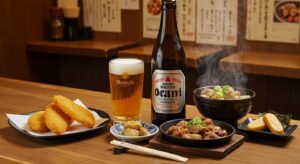
During the Asian Games, the Nishiki area becomes a popular gathering spot for spectators and athletes alike. Sekai no Yamachan offers not just chicken wings but also doteni (offal simmered in Nagoya-style miso), which pairs well with beer. I think it’s very Nagoya to calm down after the excitement of watching the competitions by nibbling on chicken wings here.
Information on Sekai no Yamachan Nishiki Chuo Branch
- Address: 3-9-16 Nishiki, Naka Ward, Nagoya, Aichi Prefecture
- Access: About a 5-minute walk from Sakae Station on the Higashiyama Line
- Hours: Mon-Sat 5:00 PM – 12:15 AM / Sun 5:00 PM – 11:15 PM
Shiro’s Tip
Sekai no Yamachan opens at 5 PM, which fits perfectly after watching the competitions. You can order just one chicken wing, but many people go for five or ten. It’s smart to start with five and see how you feel—if you’re still hungry, you can always order more. The chicken wings take a little time to come out, so ordering doteni and a draft beer first makes the wait much more bearable.
5th Stop: Menya Hanabi Takahata Main Store (Nakagawa Ward) — The Origin of Taiwanese Mazesoba is in Nagoya
Now popular across Asia, the “Taiwanese Mazesoba” was created here in 2008. This dish features a soupless mazesoba topped with Taiwanese minced pork (spicy stir-fried ground pork), egg yolk, chives, seaweed, and fish powder. You mix it all together before digging in. Once you’re done, it’s customary to add “oi-meshi” (a small amount of rice) to the bowl and mix it with the leftover sauce for a satisfying finish.
The main store is located in the residential area of Takahata, about a 30-minute subway ride from the city center. It’s a bit of a trek, but there’s something meaningful about having lunch in the place where this dish first gained popularity worldwide. During the Asian Games, tourists from various countries can enjoy the “Taiwanese Mazesoba” they’ve had back home, right at its birthplace — I thought this experience was worth including in the article.
Information on Menya Hanabi Takahata Main Store
- Address: 1-170 Takahata, Nakagawa Ward, Nagoya, Aichi Prefecture
- Access: About a 15-minute walk from Takahata Station on the Higashiyama Line, or a 5-minute taxi ride
- Hours: Tue-Fri 11:30-14:00 / 18:00-21:00, Sat-Sun 11:00-14:30 / 18:00-21:00
- Closed: Mondays
Shiro’s Tip
Besides the main store, there are branches of Hanabi in the Fushimi and Sakae areas of Nagoya. Sometimes, it makes more sense time-wise to visit a branch that fits into your sightseeing route. However, the main store has unique menu items and a different atmosphere, and it’s generally easier to get a seat in the evening than at lunch. You can choose from four levels of spiciness, and even “spiciness level 1” packs a good punch.
Access Guide to Nagoya
From Major Cities to Nagoya Station (JR & Shinkansen)
| Departure Point | Transport | Travel Time |
|---|---|---|
| Tokyo | Tōkaidō Shinkansen (Nozomi) | About 1 hour 40 minutes |
| Osaka (Shin-Osaka) | Tōkaidō Shinkansen (Nozomi) | About 50 minutes |
| Fukuoka (Hakata) | Sanyō & Tōkaidō Shinkansen (Nozomi) | About 3 hours |
| Chubu Centrair International Airport | Meitetsu Limited Express (Mu Sky) | About 28 minutes |
Getting Around Nagoya
The subway covers almost all the major spots in the city. If you can navigate the three lines—Meijo Line, Higashiyama Line, and Sakuradori Line—you can reach most venues and tourist attractions within walking distance. During the competition period, a one-day pass (760 yen) is a good deal.
Recommended Hotels During the Asian Games
① Courtyard by Marriott Nagoya (Sakae Area)
This international brand hotel is located next to the International Design Center in the heart of Sakae. It offers good access to major tourist spots and dining areas in Nagoya, and they have English support available. During the Asian Games, many international visitors will be staying here, so expect a multilingual environment right from check-in. The Sakae area is within walking distance of both Sekai no Yamachan and Yaba-ton, making it easy to explore food options at night.
- Address: 1-17-6 Sakae, Naka Ward, Nagoya, Aichi Prefecture
- Access: About a 5-minute walk from Fushimi Station on the Higashiyama Line
② Nishitetsu Hotel Croom Nagoya (Sakae/Nishiki Area)
This mid-sized hotel is conveniently located near Nishiki 3-chome. It’s just a short walk from the lively Nishiki area, where you can find Sekai no Yamachan and various bars. The prices here are more budget-friendly compared to the Courtyard, making it a good option for travelers who want to save some cash for meals and sightseeing. Plus, it’s within walking distance of major subway stations in Nagoya, so getting to the venues is easy.
- Address: 3-4-3 Nishiki, Naka Ward, Nagoya, Aichi Prefecture
- Access: About a 5-minute walk from Sakae Station on the Higashiyama and Meijo Lines
Tips for Making the Most of the Asian Games
1. Book your hotel right away
With about two months left until the opening of the Games (September 19), hotels in Nagoya are already starting to fill up for the event. Especially in the prime areas around Sakae, Nishiki, and Nagoya Station, your options will quickly dwindle if you don’t secure a room this week.
2. Purchase competition tickets in advance on the official site
The number of competitions you can buy tickets for on-site is limited, and popular events (like baseball, basketball, and the opening ceremony) may sell out. If you know which events you want to see, please buy your tickets in advance on the official site (aichi-nagoya2026.org).
3. September in Nagoya can be quite hot
Nagoya is known for its intense heat, sometimes referred to as one of Japan’s “three major hot spots.” Even in late September, daytime temperatures can exceed 30 degrees Celsius. An umbrella, a hat, and frequent hydration are essential. Some venues have outdoor seating, so taking precautions against heatstroke is a must for spectators.
4. If you’re also visiting Gifu, consider Takayama
The venues for the Asian Games are also set up in Gifu (at the Gifu Memorial Center), allowing for a day trip to Takayama while watching the competitions. It takes about two hours to reach Takayama from Nagoya via the Hida Limited Express. Early October in Takayama marks the beginning of the fall foliage season, making it a sensible route to explore.
Conclusion
The 2026 Asian Games will be held in Nagoya, Aichi, from September 19 to October 4. If you want to conquer Nagoya’s food scene while watching the games, focus on five key dishes: the morning culture, miso katsu, hitsumabushi, tebasaki, and Taiwan-style mazemen. This will give you a clearer picture of Nagoya’s culinary culture.
Each dish has a density that makes you think, “I’d come just for this.” With athletes from 45 countries gathering at the end of summer, experiencing the games while enjoying Nagoya’s food should be quite unique. Just make sure to book your hotel today.
Related Articles
If you’re looking to expand your travels in the Aichi and Gifu area, check these out. The Asian Games will also have events in Gifu, and Takayama is just a two-hour ride on the express train from Nagoya.


Comments