

Many people think, “Yanagawa is far away.” But when you actually drive there, it takes just a little over an hour from Hakata using the expressway. I first realized this discrepancy in perception during my third month of living in Fukuoka. As I breathed in the air mixed with the sounds of the water along the river and the scent of wisteria, I was convinced that “this is worth more than half a day’s trip.”
In this article, I will summarize a one-day plan where you depart by car from Hakata, enjoy Yanagawa’s famous steamed eel at Wakamatsuya for lunch, visit the Tachibana Family Historical Museum in the afternoon to see the armor of the Sengoku warlord Tachibana Muneshige and the garden, and then return to Hakata in the evening to wrap up at Hakata Motsunabe Ooyama KITTE Hakata.
The theme flows from “Yanagawa’s water town culture to Hakata’s offal food culture,” allowing you to experience the depth of Kyushu’s culinary offerings in just one day.
The mode of transportation is based on the assumption of using a rental car or your own car. You can also reach Yanagawa Station via the Nishitetsu Tenjin Omuta Line (about 40 minutes using the express train), but Wakamatsuya and the Tachibana Family Historical Museum are a bit of a walk from the station.
If you arrange an eSIM in advance through Klook, you can fully utilize Google Maps as your car navigation system.
Timeline for the Day
| Time | Spot | Duration | Transportation |
|---|---|---|---|
| 10:00 | Depart from Hakata | — | Car (via Kyushu Expressway, Okawa IC or Yabegawa IC) |
| 11:15 | Arrive in Yanagawa, park near Wakamatsuya | — | About 75 minutes from Hakata |
| 11:30–13:00 | Wakamatsuya (Eel Seiro Steamed Lunch) | About 90 minutes | Within walking distance |
| 13:15–14:45 | Tachibana Family Historical Museum (within the Tachibana Family Garden) | About 90 minutes | Car or a 20-minute walk |
| 15:00–15:45 | Stroll through the gardens of Onka and Shoutouen (optional) | About 45 minutes | Adjacent to Tachibana Family Historical Museum |
| 16:00 | Depart for Hakata | — | Car (via Kyushu Expressway, about 75 minutes) |
| 17:15–18:15 | Arrive at hotel, short break | About 60 minutes | — |
| 18:30–20:30 | Hakata Motsunabe Ooyama KITTE Hakata | About 120 minutes | 9F, right near Hakata Station |
11:30 Lunch: Wakamatsuya — The Origin of Yanagawa Seiro Steamed Eel
When talking about eel in Yanagawa, this name always comes up: Wakamatsuya — a long-established restaurant with over 100 years of history, located along the waterway at Okihama, the starting point for river cruises. “Seiro steamed eel” has become a nationwide dish from Yanagawa, but this restaurant continues to preserve its original form.
Based on my experience visiting eel specialty shops throughout Kyushu, Wakamatsuya’s seiro steamed eel is at a level where anyone can notice the difference from the very first bite, thanks to the precision in “charcoal grilling” and “steaming time.” The moment the lid of the steamer is removed, the aroma of sansho pepper wafts up, and the steam from the rice soaked in eel and sweet-salty sauce hits your face — this 30-second experience alone justifies the trip to Yanagawa.
Attraction of the Restaurant
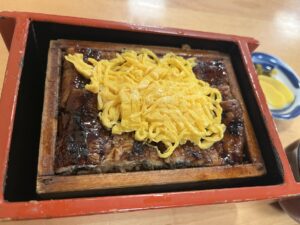
The reason Wakamatsuya’s seiro steamed eel stands out is due to the “steaming process.” In Tokyo and the Kanto region, eels are first grilled and then steamed before being grilled again, but the Yanagawa style includes an additional step of steaming the rice along with the eel in the steamer. At Wakamatsuya, the craftsmen determine the steaming time by eye and ear, adjusting it slightly based on the thickness and fat content of the eel.
This “steaming craftsmanship” allows the fat of the eel to fully blend with the sauce and rice, maintaining a consistent temperature and flavor from the first bite to the last. When you take a bite of the rice from the middle of the steamer, you can tell that the eel’s flavor has permeated each grain — this is the essence of Yanagawa seiro steamed eel.
What I want to highlight for inbound FIT travelers is that there are both tatami and chair seating, providing an environment where foreign visitors can enjoy their meal comfortably. While it can get crowded during the day, if you can enter right when the restaurant opens, you will be guided relatively smoothly.
The biggest difference from unaju (eel rice bowl) is that “the layers of flavor change as you eat” — starting with the sweetness of the rice, transitioning to the richness of the eel and the kick of sansho in the middle, and finally deepening into the concentrated sauce that settles at the bottom of the steamer. When I convey this change, many foreign travelers begin to put their phones down and focus on eating.
Restaurant Information
- Address: 26 Okihama-cho, Yanagawa City, Fukuoka Prefecture
- Access: About 5 minutes by taxi from Nishitetsu Yanagawa Station / If driving, use the paid parking near Okihama (around the river cruise boarding area)
- Business Hours: 11:00 until sold out (approximately 14:00–15:00)
- Closed: Mondays (the following Tuesday if a holiday)
- Tip for Visiting: On weekends and holidays, it often fills up right after opening at 11:00. On weekdays, you have a higher chance of getting a seat around 11:30. There is a limit to the number of seiro steamed dishes prepared, so arriving late carries the risk of them being sold out.
Shiro’s Tip
When the seiro steamed dish arrives, please wait for just 15 seconds without lifting the lid. During that time, the heat will evenly circulate to the rice at the bottom. For the first bite, eat the rice from the bottom of the steamer instead of the eel on top. The rice at the bottom, soaked in the sauce and eel fat, serves as the “appetizer” for this dish. Understanding this will help you appreciate the structure of the seiro steamed eel. Use a small amount of sansho pepper with each bite — if you use it all at once, the aroma of the eel will dissipate.
13:15 Tachibana Family Historical Museum — Armor of a Sengoku Warlord and a Nationally Designated Scenic Garden
It’s a 5-minute drive or about a 20-minute walk from Wakamatsuya. As you pass through the narrow path along the canal, you will see a stone wall surrounded by green pines. The Tachibana Family Historical Museum houses a major collection of armor, documents, and weapons passed down through generations of the Tachibana family, who served as lords of the Yanagawa domain, and is located within the grounds of the nationally designated scenic spot Tachibana Family Garden (Shoutouen). The name Tachibana Muneshige is known as “the only warlord who regained his lost territory by his own efforts after a change of domain” among Sengoku warlords, and it has recently attracted attention not only from Japanese history enthusiasts but also from history lovers abroad.
Attraction of the Spot
The core of the exhibition is the armor of Tachibana Muneshige and his wife, Ginchiyo. Muneshige’s armor is said to have been bestowed upon him by Toyotomi Hideyoshi, and its shape and weight, which are believed to have been worn, come right up to you. Ginchiyo was a female warlord who served as the castle lord, known for the rare “wife as castle lord, husband as castle guard” relationship. The texture and preservation of the armor are top-class for museum displays, designed to convey the “real weapons and real weight.”
After visiting the museum, you can enter the adjacent Shoutouen (the garden is included with the museum admission ticket). The garden, which is a “strolling garden” with water drawn from the Yanagawa canal circulating throughout, offers a picturesque view with the reflection of pine trees and the sky on the water’s surface, making it a great spot for photos. Many Google reviews mention it as “the most memorable place in Yanagawa,” and more travelers are visiting it in combination with river cruises. English explanation panels and multilingual audio guides are also available, making it enjoyable for inbound FIT travelers on their own.
Basic Information
- Address: 1 Shin-gai, Yanagawa City, Fukuoka Prefecture (within the nationally designated scenic spot Tachibana Family Garden)
- Access: About a 15-minute walk from Nishitetsu Yanagawa Station / About a 5-minute drive from Wakamatsuya (using the free parking at Onka)
- Business Hours: 10:00–16:00 (entry until 20 minutes before closing)
- Closed: Open year-round (some restrictions during exhibition changes, check the official website)
- Admission Fee: General 1,200 yen / High school students 500 yen / Elementary and junior high school students 400 yen (includes Tachibana Family Garden, Shoutouen, Western-style building, and large hall)
- TEL: 0944-77-7888
Shiro’s Tip
When you enter the exhibition room, please take a moment to stop in front of Ginchiyo’s armor. The range of motion in the shoulder guards and the way the body is shaped show structural ingenuity for deflecting spears. When viewed alongside the explanatory panels, you can gain a three-dimensional understanding of the structure of Yanagawa Castle and where Ginchiyo defended the castle. Finally, please sit for just five minutes in the gazebo at Shoutouen. The sound of the water from the canal and the memory of the seiro steamed eel you had earlier will quietly connect into a single scene.
Travel Preparation: eSIM & Transportation Pass
While a car is the best way to get to Yanagawa, if you plan to use a rental car, making a reservation in advance through Klook will make price comparisons smoother. If you arrange an eSIM through Klook or Airalo, you can use the multilingual audio guide app for the Tachibana Family Historical Museum and search for maps around Hakata hotels without needing offline access. You can also arrange taxi pickups from Nishitetsu Yanagawa Station using the GO app.
15:00 Additional Stroll at Onka and Shoutouen
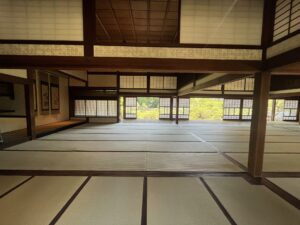
You can walk through Shoutouen garden with your admission ticket to the Tachibana Family Historical Museum. If you have time, after visiting the museum, please take a stroll through the building area of Onka. The group of buildings, which includes a Western-style building and a Japanese-style building that were renovated from the lord’s residence during the Edo period, provides a concrete experience of the “coexistence of Western and Japanese styles” during the Meiji era.
It is still actively operating as an inn and restaurant, and if you are considering a “stay trip” in Yanagawa, I strongly recommend the option of staying overnight at Onka (reservations can be made at ohana.co.jp). There is a moment on the porch where the breeze from the river blows in, and the memory of the seiro steamed eel you just had quietly fades away.
Planning a trip to Fukuoka? Check flights & hotels at a great price!
✈️ Compare flights on Skyscanner
🏨 Book hotels on Trip.com
Returning to Hakata – A Short Break at the Hotel
 Check reviews and English menu on Tabelog
🍽️ Reserve Hakata Motsu-nabe Ooyama on Hot Pepper
🏨 Find hotels near Hakata Station on Trip.com
🎫 Book Fukuoka experiences on Klook
✈️ Compare flights on Skyscanner
🏨 Book hotels on Trip.com
🎫 Book experiences & tours in Fukuoka on Klook
🍽️ Reserve a restaurant on Hot Pepper


Comments