
A day of art and food. It’s a luxurious combination for any traveler. During my journey around the world, I’ve repeated this day many times—small plates in Chelsea after visiting MoMA in New York, a bistro in Saint-Germain after the Musée d’Orsay in Paris, and wine at a French concession after the Long Museum in Shanghai. The “lingering time” between art and food etches that city into your body.
After wandering through 35 countries as a former culinary school PR staffer, I decided to settle in Fukuoka. One reason is the completeness of the Ōhori Park area. It’s not often you find a city where, within an 800-meter radius, you have waterfront walking paths, a serious art museum, local dining, and a night-time kaiseki restaurant all in one place.
In this article, I’ll introduce a day course for FIT travelers from abroad, featuring “lunch → art appreciation → waterfront stroll → dinner,” based on a route I actually put together. The total walking distance is about 2 kilometers. It’s a gentle course that allows you to move under eaves even on rainy days.
Daily Timeline
| Time | Spot | Duration | Travel |
|---|---|---|---|
| 11:30 | Royal Garden Cafe Ohori Park (Lunch) | About 90 minutes | — |
| 13:00 | Strolling by Ohori Park Pond | About 30 minutes | Walk |
| 13:30 | Fukuoka Art Museum | About 2 to 3 hours | 5-minute walk |
| 17:00 | Break at Japanese Garden & Tea Room (Optional) | About 30 minutes | 3-minute walk |
| 18:30 | Washoku Tokunaga (Dinner) | About 2 hours | 8-minute walk |
11:30 Lunch: Royal Garden Cafe Ohori Park
The day starts on a terrace where the sunlight sparkles on the pond’s surface. Royal Garden Cafe Ohori Park is located on the first floor of the Port House Ohori Park, right next to the pond, and every seat in the café offers a view of the water. If you open the window, you can hear the footsteps of runners on the opposite bank and the sound of ducks splashing in the water.
The Cafe’s Charm
Opened in the 2020s as the Fukuoka branch of a green café restaurant born in Shibuya, Tokyo. The signature roast beef bowl and pancakes have a lightness reminiscent of New York brunch cafés, and the English menu is well-organized. What I’ve learned from my travels through cafés around the world is that the combination of “waterfront + natural light + light appetizers” is perfect for the body before an afternoon of art appreciation. Keeping lunch light clears your mind, boosting your concentration by about 30% at the museum. It’s a great spot for travelers arriving in Fukuoka on early flights since they open at 9 AM on weekends.
Cafe Information
- Address: 1-3 Ohori Park, Chuo-ku, Fukuoka City, Fukuoka Prefecture, Port House Ohori Park 1F
- Access: About a 7-minute walk from Exit 3 of Ohori Park Station on the Fukuoka City Subway Airport Line
- Hours: Mon-Fri 11:00 AM – 8:30 PM / Sat-Sun 9:00 AM – 8:30 PM
- Tip: The terrace seats by the pond fill up quickly on sunny weekends. Aim for just after the 11:30 AM opening for the best chance.
SHIRO’S TIP
After your meal, take a five-minute walk across the pier in front of the café to the central island of the pond. From the bridge, you can see the white walls and concrete geometry of the Fukuoka City Museum of Art reflected on the water. This moment of “previewing” the places you’ll visit later enhances your afternoon art experience.

1:30 PM Art Experience: Fukuoka Art Museum
With the lingering satisfaction of lunch, I stroll along the pond, and there it is—Fukuoka Art Museum, peeking out from behind the fountain. Designed by Kunio Maekawa, it’s a prime example of post-war modernist architecture, where concrete lines meet reddish-brown bricks. Before even buying a ticket, you can enjoy the public art scattered outdoors. The standout pieces include Yayoi Kusama’s giant yellow “Pumpkin” sitting majestically on the esplanade and the colorful “Wind Sculpture” by Yinka Shonibare CBE on the park side, along with Barry Flanagan’s hare sculpture resting on the grass—all of which you can admire for free.
The Museum’s Appeal
The collection revolves around two main themes. One is traditional art—swords, tea utensils, and modern paintings passed down from the Kuroda family, allowing you to experience the cultural depth of the Fukuoka domain. The other is contemporary art—works by Dalí, Miró, Chagall, Yayoi Kusama, and Andy Warhol, creating a world-class lineup that’s rare for a regional museum in Japan. I appreciate how the Fukuoka Art Museum packs a lot into its compact space, especially when compared to the Pompidou in Paris or the Reina Sofía in Madrid. With just two hours, you can leisurely explore all the floors, which suits a traveler’s attention span perfectly.
Facility Information
- Address: 1-6 Ohori Park, Chuo Ward, Fukuoka City, Fukuoka Prefecture
- Access: About a 10-minute walk from Exit 3 of Ohori Park Station on the Fukuoka City Subway Airport Line
- Hours: 9:30 AM to 5:30 PM (until 8:00 PM on Fridays and Saturdays; last entry 30 minutes before closing)
- Closed: Mondays (the following weekday if a holiday) / New Year’s holidays
- Tip for Visiting: The admission fee for the permanent exhibition is very reasonable at around 200 yen for adults. Special exhibitions require a separate fee. Audio guides are available in English, Chinese, and Korean.
SHIRO’S TIP
Pair Yayoi Kusama’s yellow “Pumpkin” outside with the Kuroda family’s tea utensils in the traditional art zone on the first floor—this combo lets you hop from modern dots to the wabi-sabi of the Momoyama period in just one day. The “Pumpkin” is free for anyone to view and photograph, so if you’re a photography enthusiast, swing by before or after lunch.
5:00 PM Optional: Japanese Garden and Tea House
After leaving the museum, it’s a quick three-minute walk to the “Ohori Park Japanese Garden” at the south end of the pond. This strolling garden was created in 1984 as part of the 50th anniversary project of Ohori Park, and the entrance fee is just 250 yen. The tea house “Chakai-kan” occasionally hosts matcha experiences (check in advance). Reset your tired eyes from all that art with the gradients of grass, moss, and water before heading to dinner—this little moment really elevates the day’s experience.
6:30 PM Dinner: Washoku Tokunaga (Otemon)
As I stepped into the narrow alley leading to Otemon, the only thing that caught my eye was a modest wooden noren hanging at the entrance of “Washoku Tokunaga.” There was no sign outside. Only local regulars and travelers in search of the real deal would dare to open the door—it’s a classic hidden gem.
The Charm of the Place
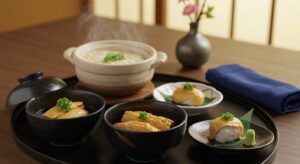
This is a kaiseki restaurant primarily featuring a counter, where the chef prepares dashi right in front of you. The aroma of the broth, the sound of the knife slicing sashimi, and the seasonal branches used for plating all engage the senses. I’ve compared it to top-tier Japanese restaurants in Tokyo, Kyoto, Kanazawa, and even Paris, and what sets Washoku Tokunaga apart is its “delicate work that subtly highlights the ingredients.” The aesthetic of subtracting to gently bring forth the seasonal bounty of Kyushu’s mountains and sea through the power of dashi is something I wish French chefs worldwide would study. It’s highly regarded by local food enthusiasts, making it a destination in its own right.
Shop Information
- Address: 1-3-17 Otemon, Chuo Ward, Fukuoka City, Fukuoka Prefecture, 1F
- Access: About a 3-minute walk from Exit 5 of Ohorikoen Station on the Fukuoka City Subway Airport Line / About an 8-minute walk from the Fukuoka Art Museum
- Hours: 12:00 PM – 2:30 PM / 6:00 PM – 10:30 PM
- Tip for Visiting: It’s a small counter-centric place, so reservations are a must. Expect the evening course to start in the high 10,000 yen range. If you’re not great at making phone reservations, going through your hotel concierge is a sure bet.
SHIRO’S TIP
When the soup arrives midway through the course, take a sip of the dashi before diving into the ingredients with your chopsticks. The flavor changes in three stages: dashi, ingredients, then dashi again. I learned this technique at a long-established kaiseki restaurant in Kyoto, and the depth of the soup at Washoku Tokunaga truly responds to this method.
Practical Tips for Inbound FIT Travelers
The Ōhori Park area is incredibly easy to access via the Fukuoka City Subway Airport Line. It’s about a 15-minute direct ride from Fukuoka Airport Station to Ōhori Park Station, costing 260 yen. If you plan to visit multiple places in a day, the Fukuoka City Subway one-day pass (640 yen) is a good deal, covering areas like Tenjin and Hakata. The Japanese restaurant Tokunaga may not reliably handle English phone calls, so it’s safer to go through your hotel concierge or an online reservation service. The audio guides at the museum support English, Chinese, and Korean, so renting one on-site can really enhance your art experience.
Travel Prep: eSIM & Transport Pass
There aren’t many Wi-Fi spots around Ōhori Park Station. If you plan to walk while searching for museums or restaurants on Google Maps, it’s a good idea to purchase an eSIM in advance. With a JR Kyushu Rail Pass, you can also extend your trip to Yufuin, Yufuin, or Nagasaki the next day.
Conclusion
After a lakeside lunch to recharge, immersing myself in art at a museum, resetting my eyes in a Japanese garden, and soaking in the lingering taste of dashi at a kaiseki restaurant in the evening—this day, all within an 800-meter radius, embodies the very reason I chose Fukuoka as my base after traveling through 35 countries. The distance walked and the strain on the body are minimal, making it suitable for senior travelers and those with children.
Lunch, museum, dinner—these three elements aren’t just independent “points.” They connect through the surface of the pond, the concrete of Maekawa Kunio, and the aroma of dashi, creating a “line.” That’s the true luxury of the Ohori Park area. I encourage you to weave this day into your itinerary when visiting Fukuoka.



Comments